
Corrugation Gum in Corrugation Machines
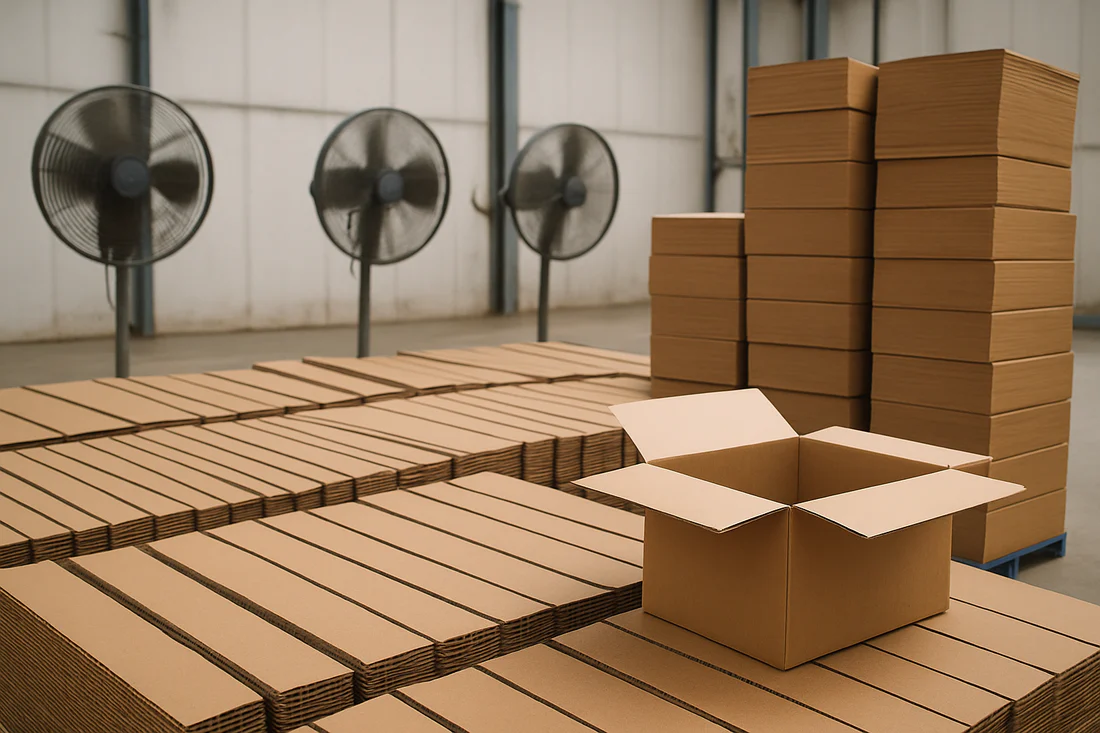
The corrugated packaging industry forms the backbone of today’s logistics, e-commerce, and retail sectors. At the center of every corrugated sheet or box manufacturing line is one essential element: the adhesive, commonly known as corrugation gum. This adhesive holds the kraft liners and fluted medium together, creating the strength and durability that corrugated packaging is known for. In two-ply corrugation—where the fluted sheet is bonded to kraft paper—the quality, consistency, and performance of the adhesive become even more critical. A high-performance gum ensures strong bonding, smooth machine operation, and superior sheet quality, making it a decisive factor in overall production efficiency.
What is Corrugation Gum?
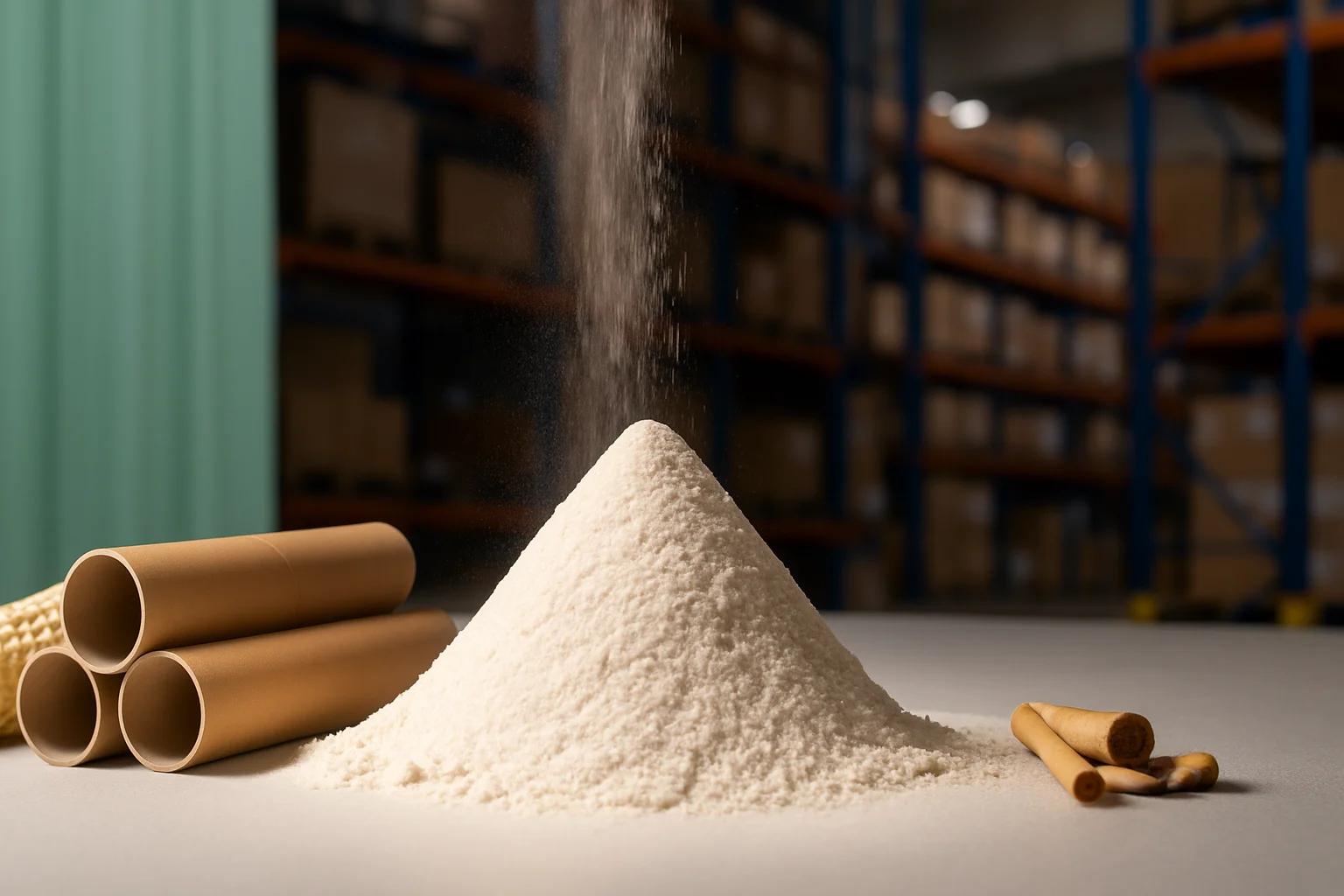
Corrugation gum is a starch-based adhesive used to bond kraft paper layers in the corrugation process. It is typically produced from starches such as maize, tapioca, potato, or pearl starch and is chemically modified with agents like caustic soda, borax, or enzymes to adjust viscosity, gel temperature, and bonding strength. Simply put, it is the key adhesive that ensures kraft liners and fluted paper stick together firmly during corrugated sheet and box production.
There are two primary types of starch adhesives used in corrugation:
- Hot Paste Adhesives
- Prepared by cooking starch
- Applied at elevated temperatures
- Suitable for high-speed, industrial corrugation lines
- Hot Paste Adhesives
- Cold Paste Adhesives
- Chemically or enzymatically modified
- Used at room temperature
- Ideal for two-ply plants and smaller production setup
- Cold Paste Adhesives
Liquid Preparation Process for Corrugation Gum Powder Dixsons make alkaline (25kg Bag)
Corrugation gum powder is a starch-based adhesive extensively used in the corrugated board and packaging industry. To ensure smooth machine operation, strong bonding, and optimal drying, the powder must be converted into a liquid gum with the right viscosity, clarity, and consistency.
Step 1: Initial Water Mixing
-
Take 50 liters of clean water in the mixing tank.
-
Open the 25 kg gum powder bag and remove the caustic soda packet kept inside.
-
Slowly add the gum powder into the water while stirring continuously.
-
Mix for 5–10 minutes to achieve a uniform, lump-free dispersion.
Step 2: Caustic Soda Solution Preparation
-
In a separate bucket, take 10 liters of water.
-
Add the caustic soda packet and dissolve fully using a wooden stick (avoid metal).
-
Slowly pour this solution into the main mixing vessel while stirring.
-
The gum will start thickening within 5 minutes.
Step 3: Dilution & Viscosity Adjustment
-
Add 50 liters of water to the mixing vessel.
-
Stir for 10–15 minutes until the adhesive becomes smooth and uniform (white/off-white).
-
Check viscosity using a B-4 Ford Cup.
-
Ideal viscosity: 18–32 seconds.
-
If too thick, add 5–10 liters of water gradually and mix until the required viscosity is reached.
Step 4: Conditioning & Usage
-
Let the prepared gum rest for 10 minutes.
-
Stir well before every use to maintain uniform consistency.
-
The adhesive is now ready for two-ply and multi-ply corrugation machines.
Step 5: Safety Precautions During Gum Preparation
-
Always wear safety goggles, rubber gloves, and a face mask when handling caustic soda or gum powder.
-
Use only a wooden stick for dissolving caustic soda—never use metal.
-
Prepare the gum mixture in a well-ventilated area to avoid fumes or heat buildup.
-
Store unused gum powder in a dry, cool, and moisture-free place to maintain quality.
Importance of Correct Gum Usage in Corrugation:
1. Correct Gum
-
Bond Strength: Ensures strong adhesion, prevents ply separation, and improves durability.
-
Runability: Smooth machine operation with reduced choking, splashing, or downtime.
-
Surface Finish: Correct viscosity avoids gum marks, uneven pasting, and white patches.
-
Cost Efficiency: Optimized gum usage lowers wastage, energy use, and paper rejection.
2. Feeding Gum into Machine
-
Pour the prepared gum into the machine’s gum tray or pan.
-
Maintain a proper gum level for uniform pickup by the applicator roll.
-
Keep the gum continuously stirred (mechanical or manual) to prevent settling.
3. Gum Application
-
The applicator roll and doctor roll regulate gum transfer.
-
Adjust the doctor roll gap to control the film thickness on the flute tips.
-
Excess gum leads to warp, longer drying time, and wastage, while insufficient gum causes poor bonding.
4. Drying and Bonding
-
As the liner is pressed against the fluted medium, heat from hot plates gelatinizes starch and bonds papers.
-
Maintain sufficient dwell time on hot plates for complete setting.
-
Use correct steam pressure (6–8 kg/cm² for most machines) to maintain hot plate temperature.
Sustainability Aspect of Starch-Based Corrugation Gum:
Starch-based corrugation gum is eco-friendly, biodegradable, and recyclable, aligning with global sustainability goals. Unlike synthetic adhesives, it does not release toxic chemicals during production or disposal. Maintaining optimum gum usage not only ensures product quality but also reduces environmental impact and adhesive wastage.
Conclusion:
For consistent and strong two-ply corrugated sheet production, correct usage of starch-based corrugation gum is as important as machine efficiency and paper quality. From gum preparation to application and drying, every step demands attention. Key parameters like viscosity, gel temperature, pH, solids, steam pressure, and doctor roll settings must be regularly monitored and controlled. By doing so, manufacturers can achieve high bonding strength, reduced wastage, and cost-efficient production, ultimately delivering reliable packaging solutions to the market.